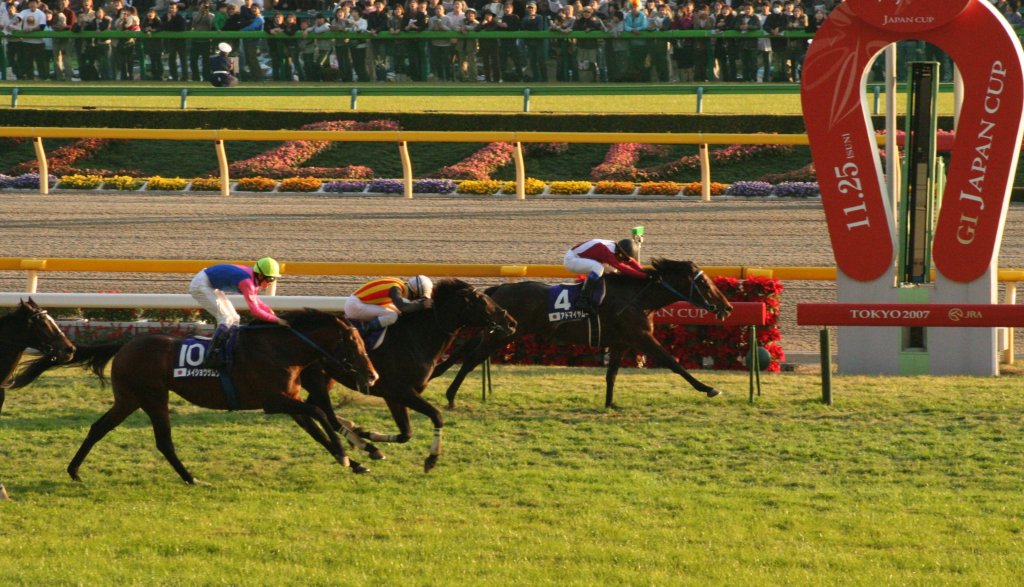
Photo: Goki / Wikimedia Commons, CC BY-SA 3.0.
India and Japan played cricket in Sano two weeks ago.
For Indian sports fans, that might sound like an unusual fixture. For Japanese cricket, it was a significant moment. On 22 September 2026, India faced Japan in a men’s T20 international at the Sano International Cricket Ground in Tochigi, as part of celebrations marking 75 years of diplomatic relations between the two countries. The match was also part of the wider Sport 75 initiative promoting sporting exchanges between India and Japan.
Rain reduced the contest to five overs per side. India scored 32 for four. Japan came remarkably close, finishing on 30 for three. India won by two runs.
For Japan, however, the scoreboard was only part of the story. The match showed how sport can create connections between countries with very different sporting cultures.
Watching it brought back memories of another Japanese sporting world.
Horse racing.
And it took me back to two meetings with representatives of the Japan Racing Association in London.
I Knew Almost Nothing About Japanese Racing
In July 2023, I joined the British Horseracing Authority through the British Horseracing Development Programme. I was still relatively new to the racing industry. I was learning about British racecourses, owners, trainers, jockeys, breeders, bloodstock, racing organisations and the culture surrounding a sport with centuries of history behind it.
At that point, Japanese racing was almost completely unfamiliar territory.
Then, in October 2023, just a few months into my time with the BHA, I attended an event in London called “Sport of Kings: Horse Racing in the UK and Japan.” The speaker was Dr Kanichi Kusano of the Japan Racing Association’s London office.
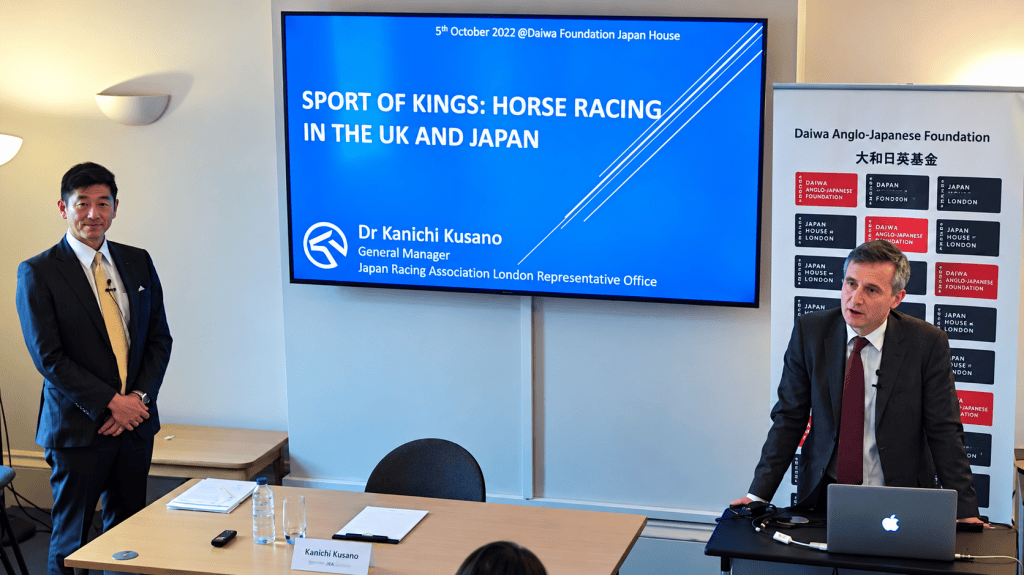
That evening was my real introduction to Japanese racing. I walked into the room knowing very little about it. I left with a lot of questions.
- Why did the JRA have an office in London?
- Why was breeding so important to Japanese racing?
- How had Japan developed such a sophisticated racing industry?
- And how had Japanese horses gone from being relatively unfamiliar internationally to competing at the highest level of global racing?
I was beginning to discover that horse racing looked very different when viewed from the other side of the world.
A Year Later, I Met the JRA Again
I met Dr Kusano and the JRA again in July 2024, towards the end of my time with the BHA. By then I had spent another nine months working within British racing and had a much better understanding of the industry. My interest was no longer simply “What is Japanese racing?” I wanted to understand why the JRA had a London office and what role it played in the international racing industry.
The earlier presentation had already shown me the differences. British racing has an extraordinary relationship with tradition and history. Japan has those things too, but it has also developed a particularly strong relationship between fans, betting, breeding and commercial scale. Japan had not simply copied British racing. It had taken an international sport and built its own ecosystem around it. Even something as fundamental as ownership has its own culture. Japan has forms of shared ownership, though the structures and terminology differ from the syndicates familiar in Britain.
The answer to the London office question became clearer as I learned more about the global nature of thoroughbred racing. The JRA established its London Representative Office in 1992, maintaining overseas offices alongside Paris, New York, Hong Kong and Sydney.
London is an obvious place for a Japanese racing organisation to maintain international connections. Britain remains one of the historic centres of global racing and bloodstock: Newmarket, Tattersalls, Ascot, Epsom, breeders, owners, trainers, racing authorities and international competitions. The thoroughbred industry may be rooted in individual countries, but bloodlines, horses, people and money move across borders. The London office is part of that international network. A race might last two minutes. The industry behind it is global.
And Then There Was the Tie
My second meeting also taught me something that had nothing directly to do with horses.
Before visiting the JRA office, I read a little about Japanese etiquette, particularly the importance of respectful greetings and gift-giving. I didn’t want to arrive empty-handed, so I took a simple gift from Britain: Earl Grey tea. Nothing extravagant. Just something British.

It was warmly received. In return, I received a Japanese Derby tie. It was elegant, impeccably crafted, and immediately became one of those souvenirs that carries a story.
Looking back, the exchange seems almost symbolic. British tea. A Japanese Derby tie. A conversation in London about two different racing cultures. Sport often works like that. The things around the competition can be just as revealing as the competition itself.
The Japan Cup
As I started learning more about Japanese racing, one race kept appearing in everything I read: the Japan Cup.
Established in 1981, the race was designed partly to raise the standard of Japanese thoroughbred racing by bringing leading international horses to Japan and exposing Japanese horses to world-class competition. The early years showed the gap. Foreign horses won the first three editions.
But Japan kept investing. The horses improved. The breeding industry improved. The competition became stronger. And eventually the picture changed.
Japanese-trained horses won every edition from 2006 through 2024, with Alkaased (2005) remaining the last foreign-trained winner for twenty years. That long sequence was finally broken on 30 November 2025 when the French-trained Calandagan won the 45th Japan Cup at Tokyo Racecourse, the first overseas success since Alkaased.
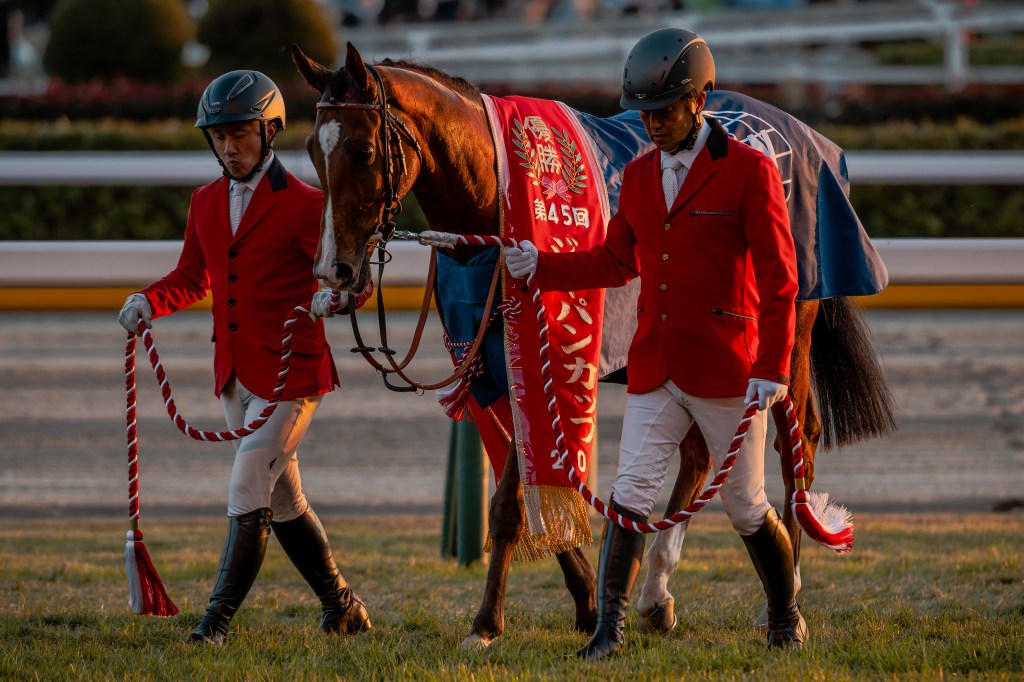
Photo: Hatomizinko / Wikimedia Commons, CC BY-SA 4.0
In 2023, the Japan Cup received the highest rating of any race in the International Federation of Horseracing Authorities’ World’s Top 100 Group 1 and Grade 1 races. That is more than a statistic. It is a story of long-term investment.
Deep Impact: When the Racehorse Becomes a Bloodline
Then I began discovering the horses behind the picture. The first horse that really helped me understand Japanese racing was Deep Impact.
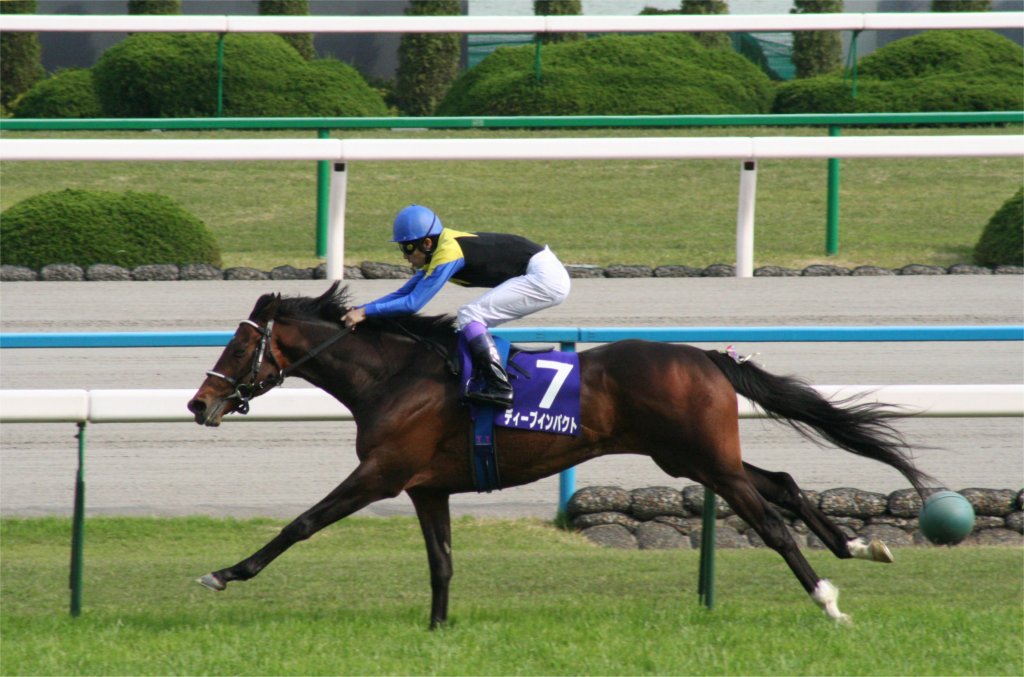
Photo: Goki / Wikimedia Commons, CC BY-SA 3.0
Deep Impact was a champion on the track, but his importance to Japanese racing became even greater after his racing career ended. He became Japan’s leading sire for 11 consecutive years, from 2012 through 2022.
This was where Japanese racing began to make sense to me. A successful racing industry isn’t only about producing a champion. It is also about what happens after the champion stops racing. The horse becomes a stallion, influences future generations, and becomes part of the industry’s future.
Deep Impact became one of the foundations of modern Japanese breeding. His story was no longer simply about winning races. It was about building a bloodline.
Equinox: The Result of That System
Then came Equinox. By the time I was becoming more familiar with Japanese racing, it was impossible to ignore him.
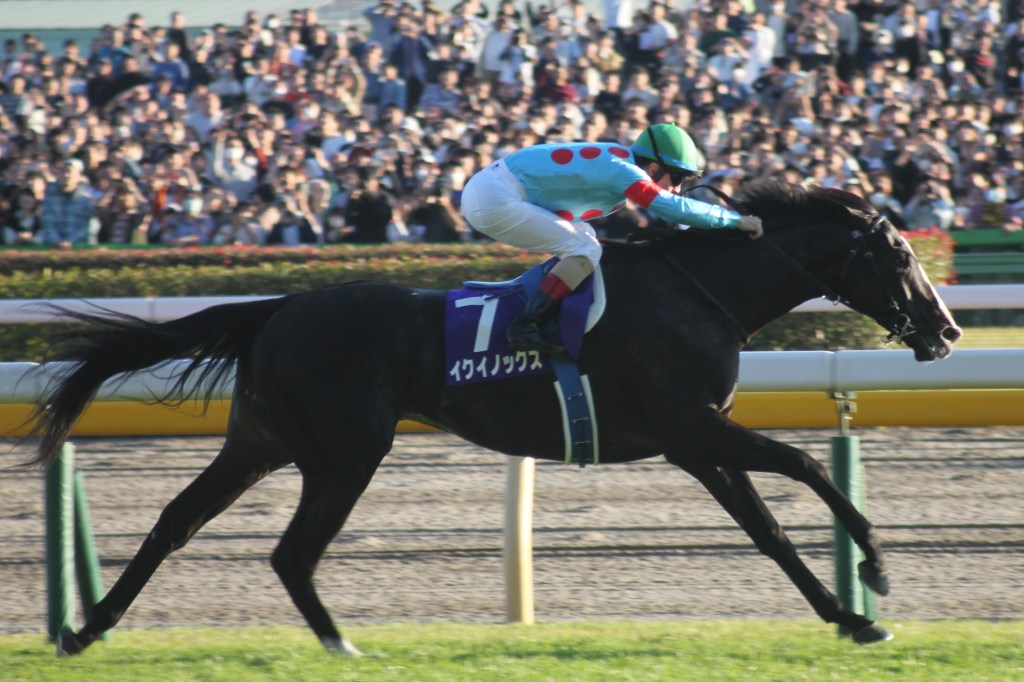
Photo: ジョンドウ / Wikimedia Commons, CC BY-SA 4.0
Equinox was named JRA Horse of the Year in both 2022 and 2023. In 2023, he won the Dubai Sheema Classic, Takarazuka Kinen, Tenno Sho (Autumn), and Japan Cup. He retired at the end of that season after eight wins from ten starts and more than ¥2.2 billion in earnings, before entering stud at Shadai Stallion Station with an inaugural fee of ¥20 million.
That transition is fascinating. The horse stops racing. But his sporting career isn’t necessarily over. It changes form. He becomes part of the breeding industry. His value is no longer measured only by how quickly he can run 2,400 metres, but by what he might pass on to the next generation. That is the business of bloodstock, and it is one of the reasons Japanese racing has become such a significant international player.
The White Wonder
There is one horse I cannot leave out. Not because she tells the whole story, but because she was the horse that personally caught my attention: Sodashi.
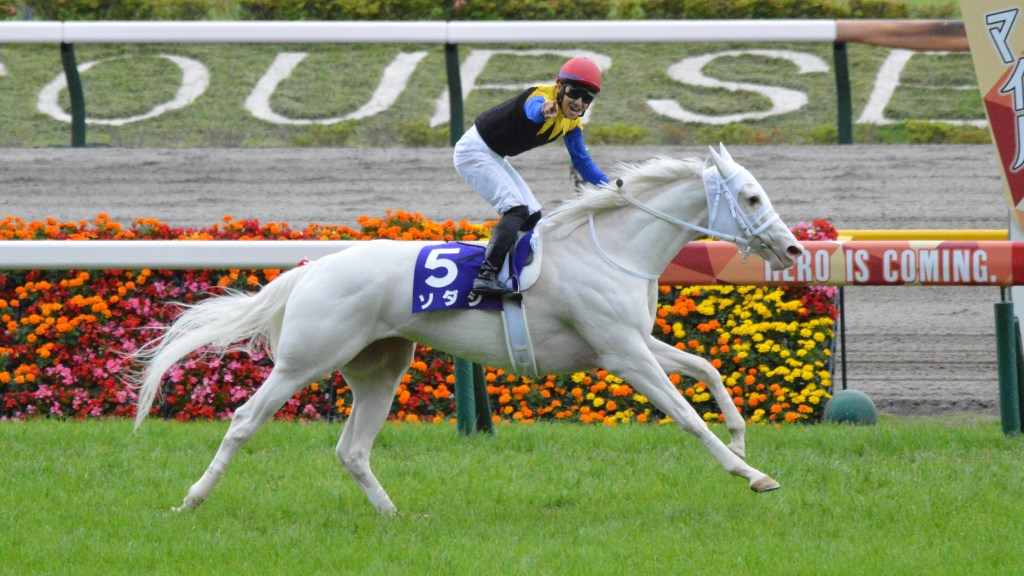
Photo: Nadaraikon / Wikimedia Commons, CC BY-SA 3.0
When you’re relatively new to horse racing and see a completely white thoroughbred winning major races in Japan, it is difficult not to look twice. Sodashi became the first white horse to win a JRA Grade 1 when she won the Hanshin Juvenile Fillies in 2020. The following year she won the Oka Sho, becoming the first white horse to win a Japanese Classic.
She was unusual. Then she became a champion. And eventually, she became a fan favourite.
For me, Sodashi was a reminder that behind all the talk about breeding, betting, and international competition, sport still depends on something much simpler. People need a reason to care. A champion gives them one. A character gives them another. And sometimes a white horse gives them an unforgettable one.
What Japan Did Differently
The more I learned, the more I became interested in the development strategy behind Japanese racing.
Japan did not simply attempt to reproduce British racing. It invested in bloodstock, developed world-class racecourses, built a huge domestic audience, encouraged international competition, and created a system in which racing and breeding reinforced each other. Eventually it began producing horses capable of competing with the best in the world.
Deep Impact represented the breeding legacy. Equinox represented the modern result of that system. Sodashi represented the emotional side of the sport. The Japan Cup represented the international ambition. And the JRA’s London office represented the connections between Japan and the wider racing world.
Suddenly, Japanese racing no longer seemed so unfamiliar. It was a different answer to the same question: How do you build a sporting culture?
Back to Cricket
That is why the India-Japan cricket match caught my attention.
India already has one of the world’s most powerful cricket cultures. Japan is still developing its own. Players such as captain Kendel Kadowaki-Fleming, Japan’s leading T20I run-scorer, and the young spinner Charlie Hara-Hinze, who took two wickets in the five-over contest, already give the side recognisable faces and a competitive edge.
The venue itself told part of the story. The Sano International Cricket Ground, Japan’s first purpose-built cricket facility, normally seats only a few hundred. Temporary stands raised capacity to around 2,000 for this match. The pitch had been re-laid with technical help from Sri Lanka Cricket. It is still a modest ground by international standards, yet it hosted the biggest fixture Japanese cricket has ever staged.
Behind the scenes, a longer-term effort is under way to develop cricket hubs, expand participation and build facilities capable of hosting international cricket. Support is coming from the BCCI, Sri Lanka Cricket, Japanese sporting authorities and the ICC. The scale is very different from India’s, but the direction is clear.
The two countries don’t need to have the same relationship with cricket. Japan doesn’t need to become India. The more interesting question is what Japanese cricket will eventually become.
That is perhaps the same question that could once have been asked about Japanese horse racing. What happens when a country takes an international sport and makes it its own?
Japan’s answer in horse racing has taken decades. It involved investment, patience, breeding, infrastructure, fans, and international relationships. There is no reason cricket’s story in Japan has to follow exactly the same path. But the possibility is fascinating.
What I Took Away from the JRA
When I think back to those two meetings in London, I don’t remember them simply as professional networking opportunities. They were part of my education in sport.
I arrived at the first meeting in October 2023 knowing very little about Japanese racing. That presentation opened a door. I returned in July 2024 with a better understanding of British racing and greater curiosity about what lay beyond it: the JRA’s international role, the conversation about two racing cultures, the discussion of breeding and ownership, the Earl Grey tea and the Japanese Derby tie.
Somewhere along the way the names became familiar: Deep Impact, Equinox, Sodashi, Japan Cup, Tokyo Racecourse. An unfamiliar industry became a clear example of how sport can evolve differently in different parts of the world.
Sport is never just the game. It carries history and culture. It creates businesses, builds communities, and fosters international relationships. Sometimes it even becomes a form of diplomacy.
India and Japan have now shared a cricket pitch. I first discovered Japan through a racing presentation in London. The sports were different. The circumstances were different. But the lesson was the same.
You don’t have to inherit a sporting culture exactly as someone else built it. You can learn from it, adapt it, invest in it, and eventually make it your own.
That is the most interesting thing I learned from Japanese racing. Not how to bet on a horse or pick a winner, but how a country can take a sport, build an ecosystem around it, and make it its own.
Sources
BCCI: India to play Japan in historic T20I in Sano
ICC: Japan name squad for historic India T20I in Sano
Careers in Racing: British Horseracing Development Programme
Daiwa Anglo-Japanese Foundation: Sport of Kings – Horse Racing in the UK and Japan
Japan Racing Association: International Offices / Contacts
Japan Racing Association: Japan Cup History
Indian Express: Japan prepares ground for T20 with India
Japan Cricket Association: JCA 2023–2027 Strategy
Japan Racing Association: 2025 Japan Cup Report (pre-race)
Japan Racing Association: Calandagan wins 2025 Japan Cup
International Federation of Horseracing Authorities (IFHA): World’s Top 100 Group 1 Races 2023
Japan Racing Association: Breeding & Sales
Japan Racing Association: 2023 JRA Awards (Equinox)
Japan Racing Association: 2020 JRA Awards (Sodashi)
Japan Racing Association: Sodashi wins 2021 Oka Sho
Japan Racing Association: Structure & Activities


Leave a comment