This coursework was completed as part of my MSc in Sport Management, Politics and International Development at Loughborough University in 2021.
Abstract
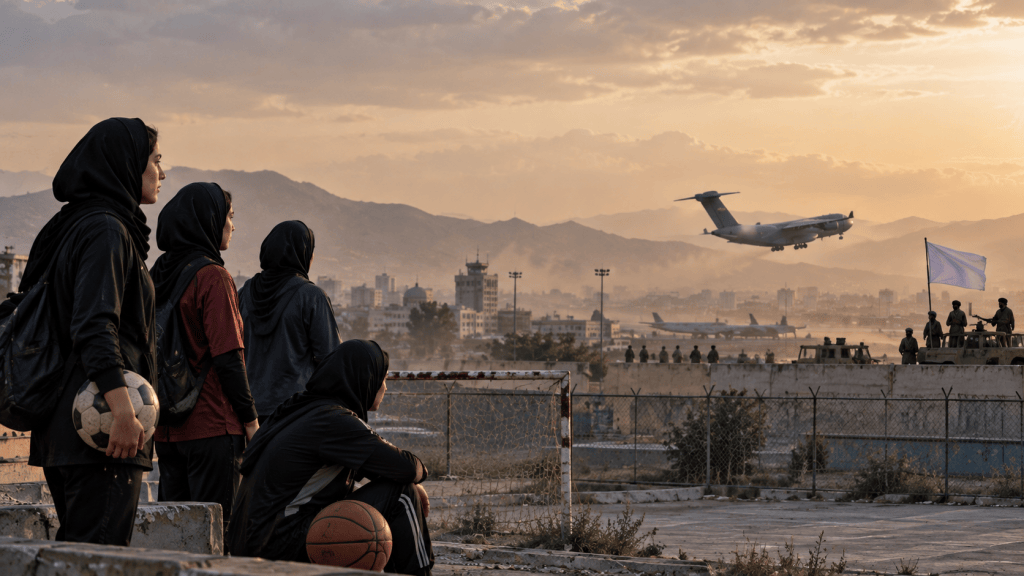
The return of the Taliban to power in Afghanistan in August 2021 raised serious concerns about the future of women’s rights and participation in public life, including sport. This coursework examines the implications of the Taliban’s interpretation of Islam for Afghan women in sport, exploring the relationship between political ideology, gender, religion and sporting participation.
Drawing on the political ideologies of conservatism and liberalism, the coursework analyses how the Taliban’s restrictive interpretation of religious principles has been used to justify women’s exclusion from sport. It considers the role of cultural expectations surrounding modesty, sexuality, family honour and nationalism in controlling women’s bodies and limiting their public participation. The discussion also examines the perspectives of Islamic feminists, who challenge patriarchal interpretations of Islam and argue that religious faith and women’s participation in sport are not inherently incompatible.
The coursework further explores Western involvement in Afghan women’s sport, considering the tensions between liberal ideals of individual freedom and equality and concerns about the imposition of external values. Through examples of Afghan sportswomen who have challenged gendered restrictions, it highlights sport’s significance as a space for agency, visibility and the pursuit of human rights.
The coursework argues that the political use of religion to restrict women’s sporting participation must be distinguished from Islam itself. It concludes by emphasising the importance of approaches that recognise Afghan women’s agency, engage with diverse interpretations of Islam and support women’s rights and opportunities to participate in sport.

